Desoutter Industrial Tools

General Industries

Aerospace

Datacenters

Automotive

New energy vehicles

Quality Assurance in Assembly: Measurement, Calibration and Traceability

banner_quality assurance

Why measurement and calibration matter for quality assurance 

Today’s industrial landscape demands uncompromising quality standards. Effective quality assurance can cut defects by more than 30% annually. But it’s not just about checking power tool performance — measurement and calibration drive continuous improvement and ensure compliance with international standards. 

At Desoutter, we see measurement and analysis as essential for reliability, safety, and product liability. This article explains why these steps are critical and how they help guarantee quality in bolted assembly tools. 

What is the calibration of a measuring instrument?

Calibration is the determination and documentation of the deviation between the reading of a measuring instrument or a control unit, and the value indicated by a higher-level reference device. This means that two values are compared, one of which is known and fixed.  

During the calibration of a measuring instrument, the correlation between the input and the output is determined and documented under defined conditions. The input is the physical parameter to be measured, such as torque or angle. The output is often an electrical signal from the measuring instrument but may also be a displayed value.

Desoutter Service can manage the calibration of your tools! Learn more about our accredited calibration services

How is adjustment closely related to calibration? 

Adjustment is the process of setting a measuring instrument in such a way that the deviation between the actual and the required measured value is as small as possible and is within the equipment specification. Adjustment involves a physical change to the measuring instrument.  

Adjustment is often closely connected with calibration. The objective of both processes is to detect and document deviations. If, during the calibration process, the reading given by a measurement device or the output of a controller is found to be outside the admissible tolerance limits, the equipment must be adjusted until the measured values fall within these limits. But calibration is not always enough. If the torque scatter is out of bound the instrument must be maintained. Only tools that have been properly serviced and adjusted ensure proper production results.

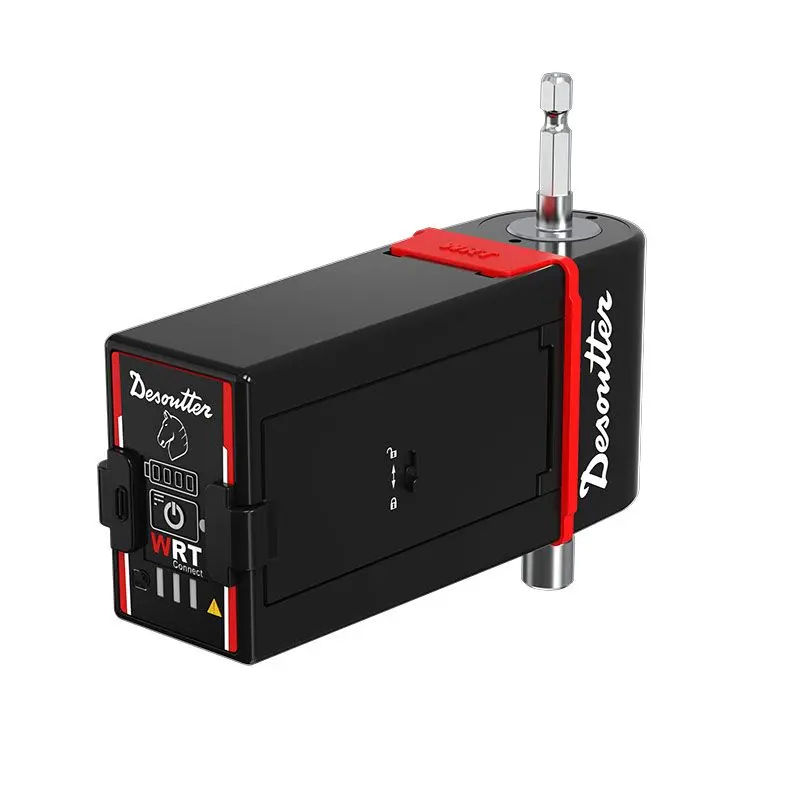
Explore Wireless Rotary Transducer

to help you achieve traceability in tightening operations

WRT - Wireless Rotary Transducer

What measurement means for assembly tools?

Measurement means determining whether a requirement, such as the correct functionality or accuracy of a system or measuring instrument, is met. Normally, the result of a measurement is a measured value or a series of measured values. A measurement result always represents an estimation that is more or less precise and includes a measurement uncertainty. The objective of measurement is to make a clear statement about an unknown factor, which is a key component of quality assurance best practices in industrial assembly.

What “standard” means in an industrial context? 

At Desoutter, we refer to a “standard” as a measurement instrument used in calibration processes.

A standard is the definition of a given quantity – i.e., it is a sort of reference, like the atomic clock kept by the German National Institute (PTB).  

Physical dimensions such as torqueforce, or temperature are standards. Most countries maintain their own national standards, which are compared at an international level. Standards used in the production process are referred to as working standards. 

When does the verification step occur? 

Verification is the process of checking an instrument against a reference unit to confirm that it complies with the specifications provided by its manufacturer. Calibration intervals for measuring instruments and production equipment depend on several factors, including: 

  • Quantity measured or produced 
  • Admissible tolerances 
  • Condition of measuring instruments and equipment 
  • Stability of past calibration results 
  • Accuracy required 
  • Quality assurance requirements 
  • Ambient conditions

As a result, calibration intervals must be defined and monitored on a case-by-case basis, depending on the application and user requirements. This responsibility typically lies with the company’s quality manager. 

For new equipment, calibration intervals are often set initially to a shorter period and then adjusted based on long-term stability. In most cases, annual calibration is sufficient, while safety-critical applications may require intervals of 6 months or even 3 months.
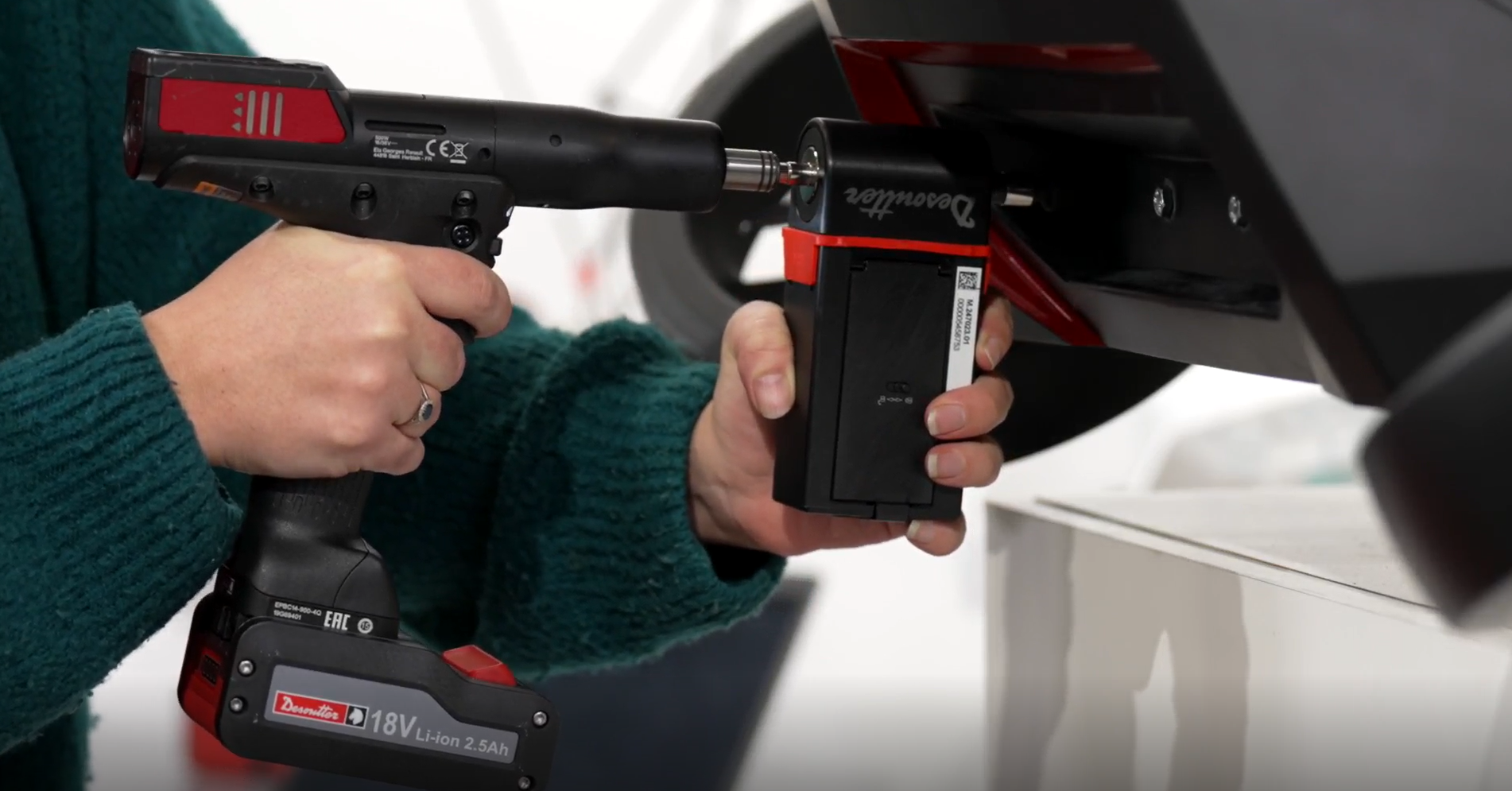
Why is certification a crucial step?

Certification is the confirmation of processes and routines related to norms and standards by an independent, accredited certification body. The certificate issued confirms compliance with applicable standards. Certificates are often issued with expiry dates and are verified independently to ensure compliance.

Want to know more about regulatory obligations? Check our latest dedicated article:

Banner article quality assurance

Quality assurance: Norms and standards you need to know

How is accuracy a crucial pillar of value?

Accuracy describes the ability of a measuring instrument or a machine to deliver values that are near to the true value. The machine capability indices Cm and Cmk are often mentioned in connection with accuracy. Discover more in our dedicated article: Machine capability index: Reference for accuracy assessment. 

These indices were established in the automotive industry as a method of assessing the quality and suitability of power tools.

How does measurement uncertainty drive instrument choice?

Measurement uncertainty quantifies the accuracy of a measuring instrument under operating conditions. It is not a fixed value and must but determined individually for each instrument. It is used to determine whether a measuring instrument is suitable for the required quality process. The optimal choice of a measuring instrument saves costs as excessive accuracy may be unnecessary and expensive. A classification of your joints (Criticity of assembly operations in the Control Plan) can help you in this process.

Why is residual torque checking important?

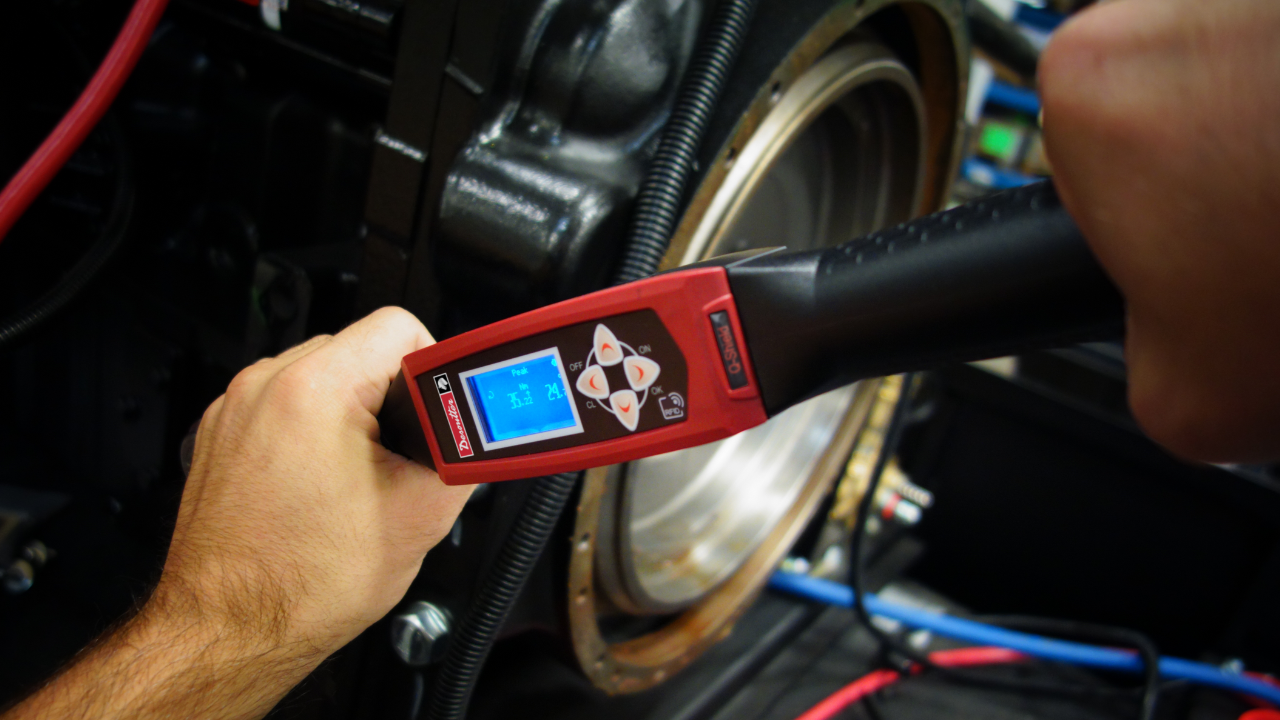
Residual torque checking is the process of measuring the remaining torque on a joint after tightening. This step ensures that the joint maintains the correct torque level and helps identify any potential relaxation. It is a critical step for safety-sensitive applications: detecting joint relaxation early prevents failures and guarantees compliance with torque specifications. Residual torque checking can be carried out during a new assembly process to confirm proper tightening or to verify relaxation under torque or over torque conditions. 

It can be measured after tightening with various tools, including: 

  • Pulse tools 
  • Continuous tools 

If the residual torque does not meet the specified tolerance, several corrective actions are possible from tool calibration check and joint inspection to retightening and rechecking.

Discover Q-Shield C Digital Torque Wrench

What is tolerance for assembly operations? 

The tolerance is the difference between the upper and lower limit, i.e., the admissible deviation from a target value. Deviations from a target value are permitted as long as the measured value remains within the defined tolerance range.   

In addition to monitoring the average deviation from the setpoint, it is essential to ensure that all measured values remain within the defined tolerance limits. Controlling the dispersion of results is equally important, as it guarantees process stability and consistent product quality. 

How traceability helps meet national standards? 

Traceability describes a process by which the value indicated by a measuring instrument is compared with national standards through one or more steps. This concept is central to traceability in manufacturing. At each step, a measurement instrument is compared with a measuring standard (reference) which has been calibrated using a higher-level measuring standard. Measurement uncertainty increases with distance from the highest-level standard in the hierarchy. Each standard or measuring instrument should be calibrated using higher-level reference. As a general rule, the standard (reference) used for calibrations should have at least five times higher accuracy than the device being calibrated – ensuring reliable traceability in manufacturing. 

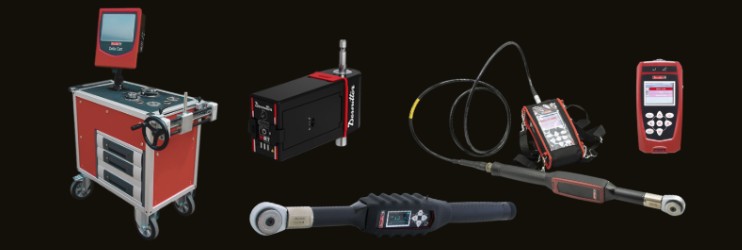
Discover more specifications about our quality tools! 

control-quality

Quality assurance - Best practices

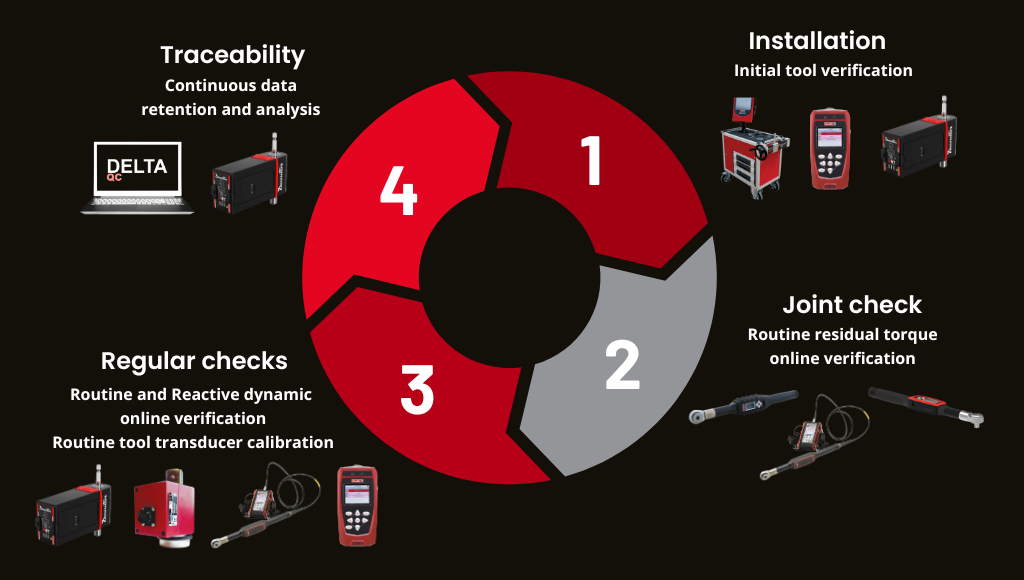
Ensure quality assurance in tightening requires different steps: 

What are the important elements to consider when selecting your quality equipment? 

  • List Torque specifications / Quality Control specifications 
  • Classification of your joints (Criticity of assembly operations in the Control Plan) 
  • Processes for tool testing, joint testing and standard calibration equipment 
  • Ensure data is collected, maintained and accessible

Quality is the silent ambassador of your factory!