


Aerospace
Automotive
Data centers
New energy vehicles
System integrators
General Industries
How does Desoutter use eco-design to meet environmental targets?
October 9, 2026


|
Sustainability isn’t a side project: it’s embedded across product design, R&D, logistics, and supplier partnerships, overseen by a dedicated Steering Committee and supported by cross‑functional teams. External ESG platforms like EcoVadis and NQC Supplier Assurance help us track progress and continuously improve. |
|
Desoutter’s Environmental Targets
Desoutter’s environmental strategy is based on 2 main pillars:
|
1st pillar: Decarbonization |
|
|
2nd pillar: Circularity Following the 9R principles of circularity, Desoutter runs several circular initiatives. Eco design is at the heart of the product development process, from design and sourcing through manufacturing, to end-of-life disposal. |
|
In this article you will discover how environmental targets are translated into concrete actions, from early design choices to validation and testing.
Eco design drives Sustainable Innovation
For years, Desoutter R&D has followed a simple principle: each new product or solution must minimise environmental impact compared with the previous generation.
To support this, Desoutter has established a strict internal rule: every new product must target at least a 5% reduction in CO₂ emissions. Project teams are encouraged to go beyond this minimum whenever possible.
|
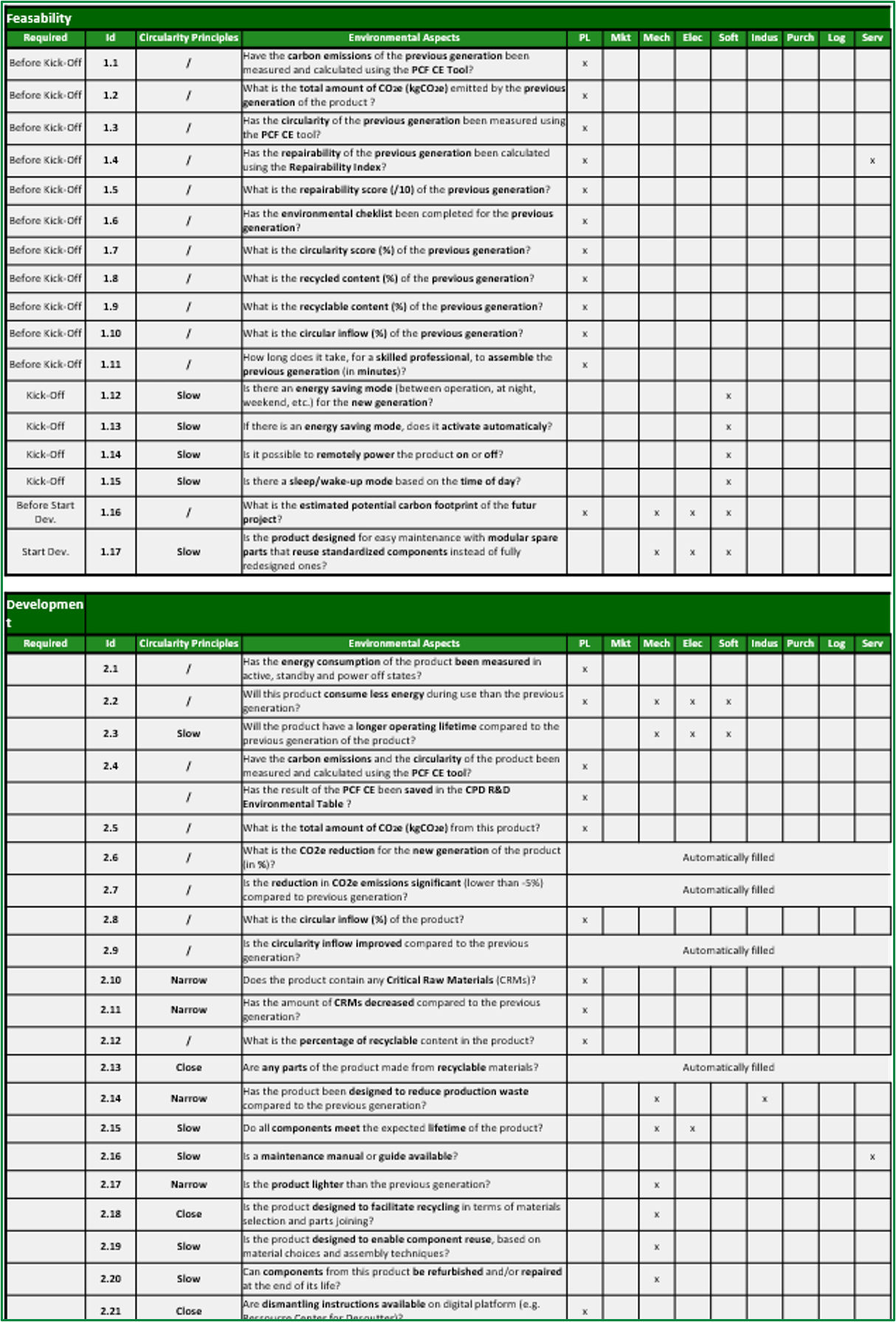
Eco-design is one lever for achieving our ambitious environmental targets. R&D, operations, and marketing teams have been trained and follow eco design guidelines throughout product development. Additionally, an environmental checklist of 40+ actions - covering CO₂ reduction, circularity, materials, packaging, and end-of-life - is used throughout product development. Each criterion must be met before a project can advance, making environmental performance a requirement from the outset, and not a late-stage adjustment. Desoutter solutions improve customer efficiency while minimising environmental impact. |
|
Designing with Impact in Mind
A product generates CO2 emissions throughout its life cycle, which can be divided into two phases: manufacturing and use.
Focusing on both phases helps achieve the greatest overall reduction in CO2 emissions.
MANUFACTURING PHASE: around 30% of total emissions*
During development, Desoutter teams work on several levers to reduce the carbon footprint associated with producing each tool:
|
|
• Selecting materials with lower embodied CO2 • Reducing overall weight • Minimising scrap and waste during production |
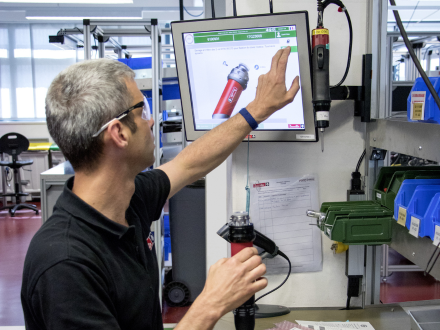
These optimisations not only reduce the manufacturing footprint but also contribute to greater durability and more efficient production processes.
USE PHASE: around 70% of total emissions*
Energy consumption during operation is the main source of CO2 emissions.
To minimise this, engineering teams focus on three levers:
|
• Optimising - Motors, electronics, and mechanical systems • Reducing - Power consumption when the tool is idle • Limiting - Heat generation to improve energy performance |
|

When it comes to the environment, every single improvement counts.
*Based on average results from Desoutter Product Carbon Footprint (PCF) measurements
Product Carbon Footprint
Once the design is complete, the validation team measures the CO2 impact of a new or redesigned product using Product Carbon Footprint (PCF) methodology, based on the ISO 14067:2018 standard.
This measurement enables us to improve tool efficiency throughout the product development process and provide recommendations to our customers.
Energy consumption is measured in 2 scenarios:
|
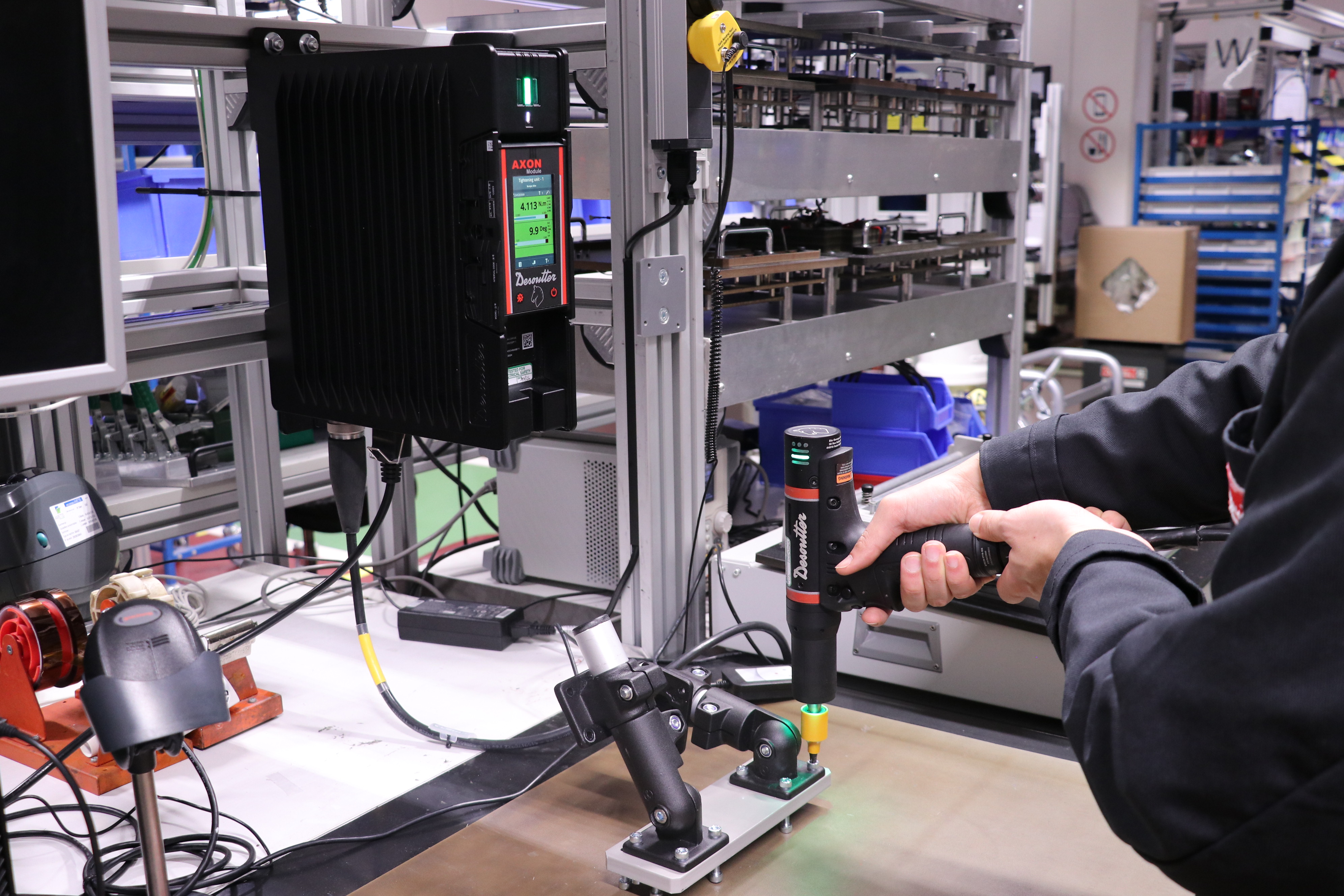
Usage Scenario For tightening tools, tests reproduce customer applications using parameters such as cycle time, target torque, rundown speed, and final speed. |
 |
|
|
|
|
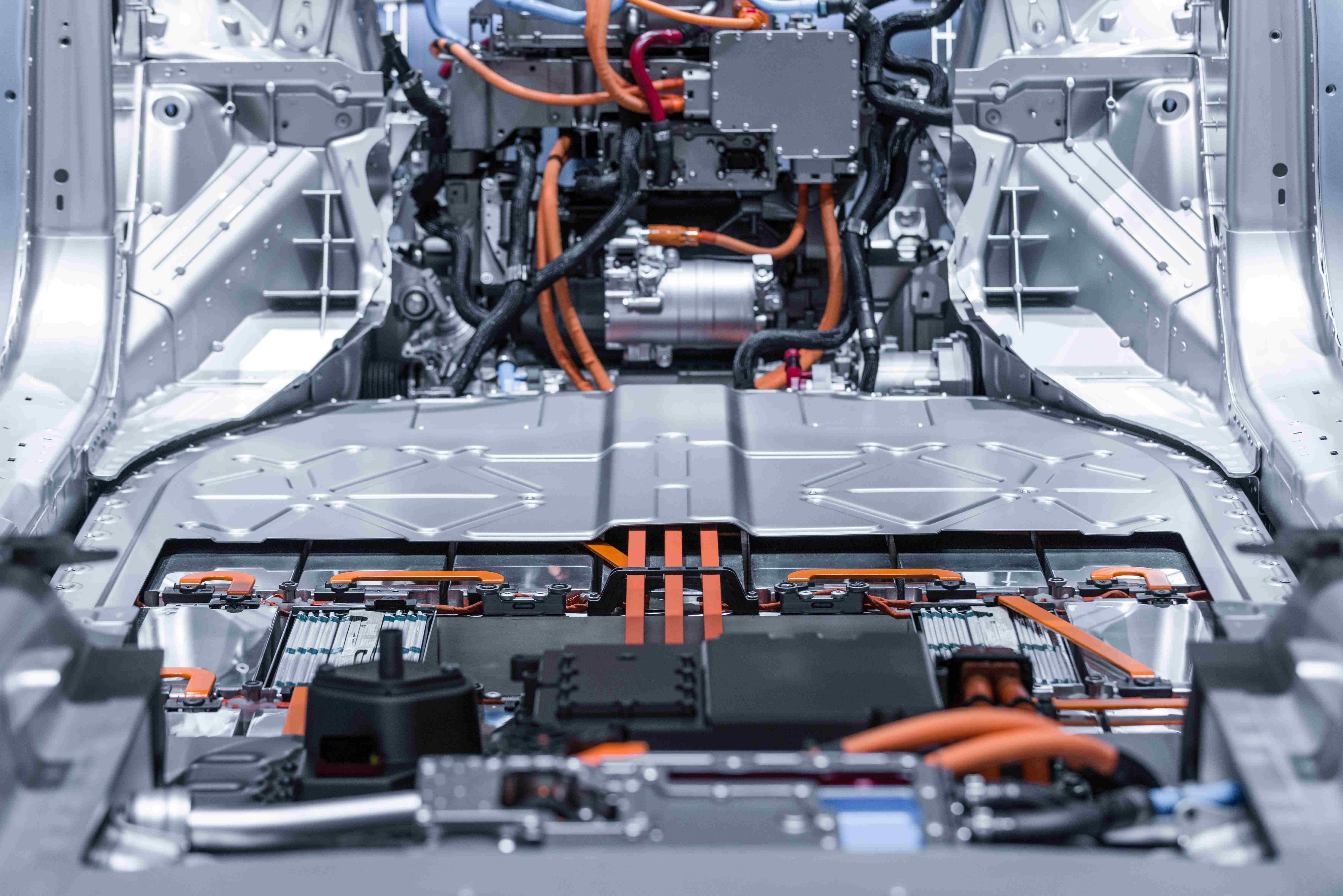
Idle Scenario Measures the energy consumed when the tool is not operating and when the tool or controller screen is unlit. |
 |
By linking measured energy savings to CO2 impact, these tests quantify the improvement achieved compared with the previous generation.
At Desoutter, environmental performance is embedded into the product lifecycle, from early design choices to final validation. Each step is structured so improvements can be measured, challenged, and consistently applied.
By combining engineering requirements with clear environmental criteria, new solutions are developed to reduce CO2 emissions, support circularity and maintain the performance levels customers expect.
|
Desoutter Sustainability Report Understand how our sustainability commitments are translated into concrete actions. |
 |
|
|
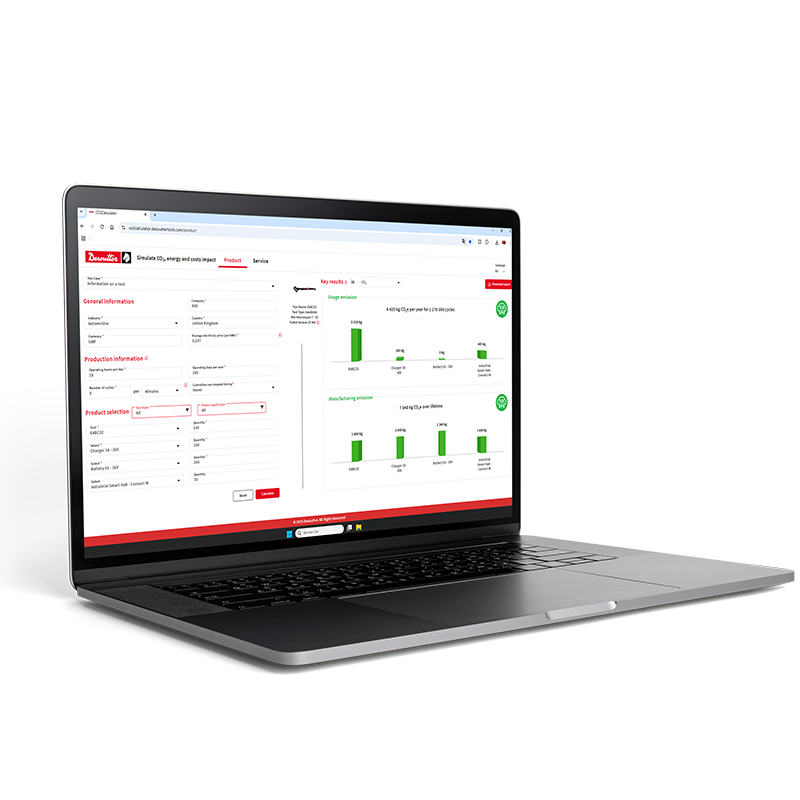
Simulate product and service CO₂ savings for your own installation. |
 |
